In today’s beverage, water, and liquid food factories, automatic vial filling machine do more than just pour liquids into containers—they’re the core of efficient production. How accurately they fill each bottle or jar affects everything from product quality to how much money your business makes.
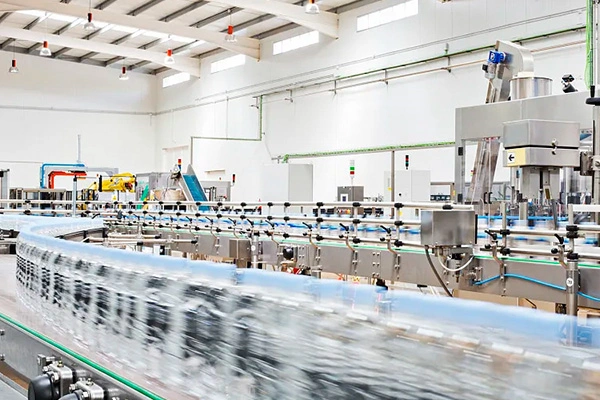
Filling accuracy refers to the deviation between the actual and set filling volumes. Here’s how to address common issues:
Most automatic vial filling machine control volume by timing valve openings or adjusting pump speeds.
- If fill volume is too high: Shorten the valve opening time slightly.
- If too low: Lengthen the time.
- For peristaltic pump or servo motor models: Use the HMI to directly set and calibrate each filling head for higher precision.
Pneumatic components power the machine, so stable air supply is critical.
- If pressure drops below 0.4MPa or fluctuates, cylinders may act unevenly, causing inconsistent fills.
- Ensure the air compressor works properly, use an air storage tank to stabilize pressure, and check for leaks in air hoses regularly.
Bottle-detection sensors control “no-bottle no-fill” functions and trigger filling start points.
- Position sensors correctly, keep lenses clean, and ensure align perfectly for accurate bottle counting and positioning.
Viscosity and carbonation affect flow rates:
- For thick juices or syrups: Extend filling time or increase pressure slightly.
- For carbonated drinks: Use isobaric filling and precise backpressure control to prevent foaming, which disrupts accuracy.
- Check filling valves for leaks or clogs—poor sealing causes underfills or drips.
- For screw-metering models: Replace worn screws promptly, as wear reduces precision.
Beyond precision, these machines integrate rinsing, filling, and capping—offering key benefits when installed correctly:
- Equipped with rotary metering discs, servo controls, and high-precision sensors for consistent fills.
- Speed is infinitely adjustable via frequency converters to match production needs.
- Filling occurs in sealed channels to prevent secondary contamination.
- All material-contacting parts are stainless steel, meeting food safety standards.
- Independent electrical control boxes use branded components with reliable grounding for operator safety.
- Linear or “L” designs save space, fitting various factory layouts.
- Quick adaptation to different bottle types, capacities, and materials (juice, mineral water, wine, distilled water) by swapping filling heads, screws, or measuring cups.
- Pure pneumatic drive eliminates “bottle jamming” issues.
- Modular design keeps functions (capping, pressing) coordinated yet independent, reducing downtime and easing maintenance.
Proper installation ensures accuracy and stability. Follow these steps:
- Choose a flat, dry, sturdy indoor surface.
- Position the main machine and conveyor table so filling heads hang vertically above the conveyor center.
- Assemble conveyor legs and columns, adjust levelness via base bolts.
- Check chain/belt tension, test run, and verify smooth operation and speed adjustment.
- Power: Use 220V (single-phase, three-wire) with correct live, neutral, and ground connections. Ensure grounding resistance meets safety standards.
- Air Supply: Connect filtered, dry compressed air (0.4–0.6MPa). Quality air ensures precise pneumatic action.
- Mount photoelectric sensors accurately, aligning emitters and receivers for reliable bottle detection and positioning.
- With professional guidance, test cylinder movements manually.
- Set filling parameters, run empty and loaded trials.
- Check coordination of bottle feeding, filling, capping, and pressing—adjust promptly if issues arise.